Store probiotics exactly as the label directs. Refrigerated probiotics belong in the refrigerator, usually 35 to 46°F. Shelf-stable probiotics belong in a cool, dry cabinet away from heat, humidity, and sunlight. Probiotic viability depends on strain, moisture, temperature, packaging, and the manufacturer’s stated “best by” date.
TL;DR
- Probiotic storage starts with the label, not the supplement format.
- Heat, moisture, oxygen, and light can affect live cultures.
- Shelf-stable probiotics still need cool, dry storage.
- Gummies, capsules, powders, and pearls can have different storage needs.
- Expired probiotics may contain fewer live organisms than the label states.
What are probiotics?
Probiotics are live microorganisms that, when consumed in adequate amounts, confer a health benefit, according to the widely used expert consensus definition indexed on PubMed. Probiotic products commonly contain Lactobacillus, Bifidobacterium, Saccharomyces, or Bacillus species. A probiotic label may list colony-forming units, often written as CFU, plus a genus, species, and strain code. Strain identity matters because Lactobacillus rhamnosus GG, Bifidobacterium animalis subsp. lactis BB-12, and Saccharomyces boulardii CNCM I-745 are distinct organisms. Probiotic storage protects viability, meaning the organisms remain alive through the “best by” date. The National Center for Complementary and Integrative Health notes that probiotic effects vary by strain, dose, product quality, and intended use. For shoppers, the practical rule is simple: live cultures need label-matched storage conditions.
How we evaluated probiotic storage
We evaluated probiotic storage by prioritizing product-label logic, microbiology basics, and sources from PubMed, NIH, and FDA dietary supplement guidance. Human health claims were kept general because this article explains storage, not clinical use. We excluded brand-only claims unless they matched standard label-reading principles. Evidence remains product-specific because probiotic strains, packaging, water activity, and manufacturing methods vary widely across capsules, powders, tablets, and gummies.

How do probiotics work?
Probiotics work by interacting with the gut environment, but storage works by protecting the organism before it reaches the body. What do probiotics do? Certain probiotic strains support gut flora balance, interact with intestinal epithelial cells, produce metabolites such as short-chain fatty acids, and compete with unwanted microbes for space and nutrients. A review indexed on PubMed describes probiotic mechanisms that include barrier support, immune signaling, and microbial competition. Those mechanisms require viable organisms when the product is designed to deliver live cultures. Temperature stress can affect cell membranes. Moisture can activate organisms too early. Oxygen can affect oxygen-sensitive strains. Sunlight and repeated opening can add stress. Probiotic storage therefore functions as quality protection. The supplement cabinet, refrigerator shelf, travel bag, and bathroom counter are not equal environments for live cultures.
What are the benefits and uses of storing probiotics correctly?
Correct probiotic storage supports label accuracy, routine consistency, and consumer confidence. A probiotic label may promise a CFU amount at the time of manufacture or through the “best by” date, and those statements are not identical. Through-date CFU labeling is more useful because it connects potency to real storage time. The FDA dietary supplements portal explains that dietary supplements are regulated as products with labeling obligations, which makes label instructions important for shoppers. Proper storage may help maintain the intended number of live organisms until use. Refrigeration can support sensitive strains when the manufacturer requires it. Dry cabinet storage can suit shelf-stable strains when packaging protects against moisture and heat. For everyday use, correct storage also makes routines easier: one home location, one label check, and one replacement date.
How should you choose a probiotic based on storage needs?
Choose a probiotic by matching strain information, CFU timing, delivery format, packaging, and storage instructions to your real routine. The best product on paper is not useful if it sits in a hot car, humid bathroom, or sunny windowsill. Use this checklist before buying a probiotic:
- Look for genus, species, and strain codes, not just “probiotic blend.”
- Check whether CFU is listed “at manufacture” or “through expiration.”
- Choose blister packs, desiccant bottles, or moisture-resistant packaging when available.
- Confirm whether refrigeration is required, optional, or not recommended.
- Avoid bathroom storage because showers create humidity.
- Check the “best by” date before purchasing.
- Pick a format you will take consistently, such as capsule, powder, or gummy.
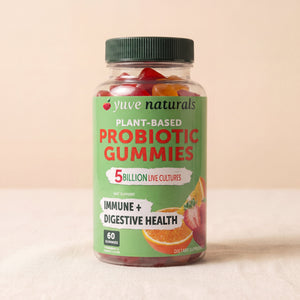
If a clean-label gummy fits your routine, Yuve Probiotic Gummies are a plant-based digestive health option to compare by label, format, and storage directions.
What should you watch out for on the probiotic label?
The probiotic label should tell you how to store the product, when potency is measured, and whether the product contains live cultures at the stated amount. “Shelf-stable” does not mean heat-proof. “Refrigerated” does not mean higher quality by default. “More CFU” does not automatically mean better routine fit. The NIH NCCIH probiotic guide emphasizes that probiotic effects depend on the specific microorganism and product. Label-reading should include inactive ingredients too. Gummies may contain pectin, sweeteners, flavors, and acids. Capsules may contain cellulose, gelatin, or rice flour. Powders may contain prebiotic fibers or stabilizers. People with dietary preferences should check for vegan, gluten-free, soy-free, and gelatin-free statements. People who are pregnant, immunocompromised, or medically complex should ask a qualified healthcare professional before adding a live-culture supplement.
How do refrigerated and shelf-stable probiotics compare?
Refrigerated probiotics and shelf-stable probiotics can both be valid when the manufacturer designs the strain, dose, packaging, and label directions correctly. Refrigeration mainly matters for organisms that are sensitive to heat or moisture over time. Shelf-stable products usually rely on strain selection, drying methods, protective carriers, and packaging controls. Storage mistakes create different risks. A refrigerated probiotic left warm for a short time may not be ruined, but repeated heat exposure can affect viability. A shelf-stable probiotic stored near a stove or in a bathroom can also lose quality faster. The practical comparison is routine fit. Refrigerated products work well for home-based routines. Shelf-stable products work well for travel, office drawers, and people who forget fridge-only products. The best choice is the one whose label instructions you can follow every day.
| Storage factor | Refrigerated probiotic | Shelf-stable probiotic |
|---|---|---|
| Typical storage | Refrigerator, often 35 to 46°F | Cool, dry cabinet or pantry |
| Main risk | Warm exposure and repeated temperature changes | Heat, humidity, sunlight, and open-bottle moisture |
| Best routine fit | Home use with consistent fridge access | Travel, office, gym bag, or daily cabinet routine |
| Label priority | “Keep refrigerated” and expiration date | “Store in a cool, dry place” and package seal |
FAQ
Do all probiotics need to be refrigerated?
No, all probiotics do not need refrigeration. Some strains and formats are designed for shelf-stable storage, while others require a refrigerator. The label is the deciding source because the manufacturer knows the strain, drying method, packaging, and stability testing. Store shelf-stable probiotics away from heat, moisture, and sunlight.
Can probiotics go bad if they get warm?
Probiotics can lose viability when exposed to heat, especially when the label requires refrigeration. One warm afternoon is different from weeks in a hot car or near a stove. If the bottle smells unusual, looks damaged, or was stored incorrectly for a long period, contact the manufacturer or replace it.
Is the bathroom a bad place to store probiotics?
Yes, the bathroom is usually a poor storage place for probiotics. Showers create humidity, and moisture can stress live cultures or affect gummies, capsules, and powders. A bedroom drawer, pantry shelf, or kitchen cabinet away from the oven is usually better. Refrigerated products should stay in the refrigerator.
What do probiotics do in the body?
Probiotics are live microorganisms that may help support gut flora balance when consumed in adequate amounts. Specific strains can interact with the intestinal lining, microbial community, and immune signaling. Effects vary by strain, dose, and product quality, so a generic “probiotic” claim is less useful than a specific strain label.
How do I know if my probiotic routine is working?
A probiotic routine is working if it fits consistently and supports your normal digestive wellness goals over time. Track routine factors such as timing, serving size, diet, hydration, and occasional digestive comfort. If symptoms are persistent, severe, or unusual for you, ask a qualified healthcare professional instead of relying on supplements alone.
Should I store probiotic gummies differently from capsules?
Probiotic gummies need the same label-first approach as capsules, but gummies can be more sensitive to heat and moisture because texture changes matter too. Keep gummy bottles tightly closed and away from sunlight. Capsules may also need dry storage because moisture can affect shells, fillers, and live-culture stability.
Conclusion
Probiotic storage is a label-reading habit: match the product to the temperature, humidity, and routine the manufacturer specifies. Refrigerated and shelf-stable probiotics can both make sense when the strain, packaging, CFU timing, and “best by” date support the choice.
If you want a plant-based digestive health format that is easy to build into a daily routine, compare Yuve’s probiotic gummies by storage directions, ingredient list, CFU statement, and clean-label fit before you buy.